
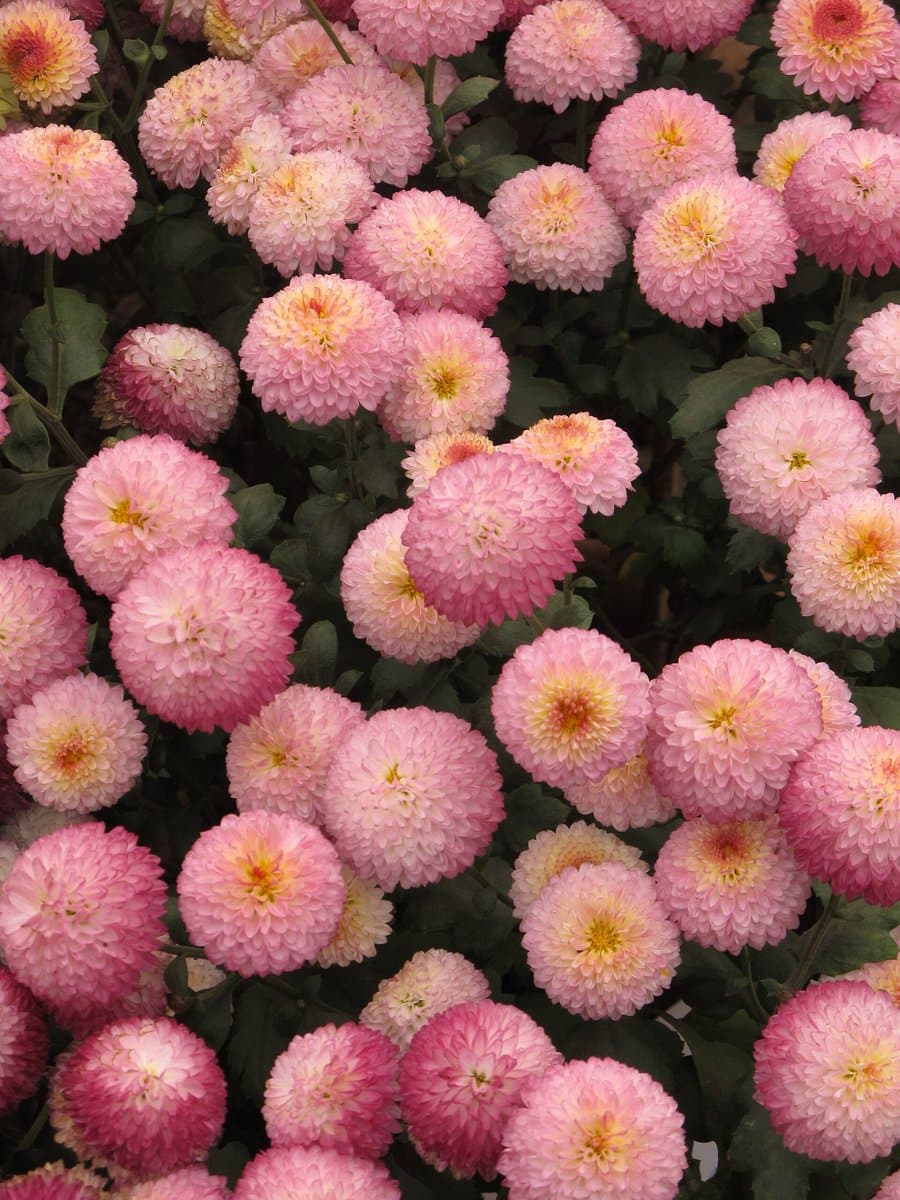
In much of India, garden chrysanthemums make leafy growth through warmer months and flower from autumn into early winter, commonly around September to December. But cultivar, region, planting date and night lighting can shift that window. Chrysanthemums are short-day plants: many initiate flower buds when nights become long enough.
Tamil Nadu Agricultural University notes that under Tamil Nadu conditions, April–May planting can produce September–December flowering, while its commercial guidance also describes June–July planting. Treat those as regional production references, not a promise for every balcony. The practical home-garden rule is to build a healthy branched plant before the natural bud-setting period, then stop pinching and protect its uninterrupted nights.
Flowering calendar at a glance
- January–February: enjoy late blooms where present; clean up spent plants and plan propagation.
- March–April: take or establish cuttings in suitable climates; refresh pots before strong growth.
- May–June: build roots and branches; begin pinching established young plants.
- July–August: maintain shape, drainage and nutrition; complete the last pinch before buds need to form.
- September–October: watch for buds; stop pruning, give strong light and avoid bright night interruption.
- November–December: peak display for many cultivars; support stems, water evenly and remove faded flowers.
Your exact dates may move by several weeks. Use new growth and visible buds as checkpoints. The Vatisha chrysanthemum profile provides the quick care summary.
January and February: finish the display, then reset
Some plants continue flowering into January, especially where winter is mild or the cultivar was started late. Keep the mix evenly moist while flowers are open, but never let the container sit in water. Remove faded blooms and diseased leaves so the centre stays airy.
After flowering, reduce stems while retaining healthy basal growth if you plan to keep the plant. In colder northern locations, protect roots from frost. In warm regions, new basal shoots can become material for division or cuttings. A florist’s pot bought in full bloom may not repeat the exact nursery display at home; it was likely managed under controlled light and feeding.
March and April: propagate and repot
Use healthy basal shoots or terminal cuttings from disease-free stock. Root them in a clean, airy medium and bright protected light. Once roots hold the mix, move each plant into its growing container.
For a home pot, the RHS recommends a container at least about 30 cm wide. Use fertile, well-drained mix and keep the crown at its previous depth. Taller cultivars need a stake early, before roots fill the pot and before stems become brittle.
In warm southern production systems, April–May may already be a planting window for autumn flowers. In colder or hill climates, protect new plants from late cold.
May and June: build a bushy framework
When the young plant is established and roughly 15–20 cm tall, pinch out the main tip just above a leaf pair. TNAU guidance places pinching around three to four weeks after planting, and the RHS uses plant height as the home-garden cue. Side shoots then develop and carry more flower buds.
Do not pinch a weak, recently wilted or unrooted cutting. First establish roots, sun and steady watering. Feed lightly during active vegetative growth using a balanced fertiliser at the label rate. A heavy dose does not create a stronger plant; salt stress and soft growth can delay progress.
Protect pots from the harshest reflected afternoon heat while still providing several hours of sun. Too much shade produces stretched stems that later flop under flowers.
July and August: finish pinching and manage monsoon
A second pinch may be used on vigorous spray types, but timing matters. Each pinch removes the growing tip and delays the next stage. Finish shaping early enough for new side shoots to mature before natural bud initiation. Once you can see forming buds, stop.
During monsoon, raise pots so drainage holes stay clear, empty saucers and give plants space. Chrysanthemum foliage is vulnerable to problems when it stays wet in crowded, still air. Water the soil in the morning when needed rather than wetting leaves every evening. Remove spotted lower leaves and clean fallen material.
Check for aphids on tender tips. A small infestation can often be washed off or removed early. Identify the pest before using any product, and protect pollinators once flowers open.
September and October: protect bud formation
As days shorten, many cultivars switch from vegetative growth to flower-bud development. Keep the plant in a sunny daytime position and avoid bright light falling on it for hours at night. A balcony security light or a strong room light through glass can interrupt the long dark period that short-day plants use as a seasonal signal.
Stop pruning. Keep moisture even: repeated wilting can damage buds, while waterlogging can yellow foliage and weaken roots. When buds are established, a flowering fertiliser higher in potassium may be used at the label rate; do not combine several fertilisers.
Stake stems before flowers become heavy. Tie loosely with soft material and leave room for stem growth.
November and December: flowering peak for many plants
Keep the pot in bright light and check moisture regularly. A flowering chrysanthemum can use water quickly, but cold or cloudy weather still slows drying. Water the mix, not the flower heads. Shelter open blooms from prolonged hard rain, which can mark petals and bend stems.
For spray chrysanthemums, removing faded flowers keeps the display tidy and may allow later buds to open. For a single exhibition-style bloom, growers remove side buds, but a balcony gardener usually gets a fuller and easier display by keeping multiple healthy stems.
Single daisy-style blooms also offer more accessible pollen and nectar than tightly doubled forms, so include them if supporting urban insects matters to you.
Regional adjustments
North and northwest plains: establish after severe cold, build growth through spring or monsoon with heat protection, and expect the main display as autumn nights cool. Frost can end or damage late flowering.
Peninsular and coastal cities: planting can begin earlier, but monsoon drainage and high humidity need attention. Warm nights can delay or alter flowering in some cultivars.
Mild elevated cities: strong growth is possible across a long season, but balcony wind and cool nights still affect pot moisture and bud timing.
Hill regions: schedules differ with altitude. Use locally raised cultivars and nursery advice rather than copying a plains calendar.
Why a chrysanthemum has leaves but no buds
- It is still immature or was planted late.
- It was pinched too recently and is rebuilding shoots.
- It receives bright light during the night.
- It is in heavy shade during the day.
- Excess nitrogen is driving soft vegetative growth.
- Extreme heat, cold or root stress interrupted bud development.
- The cultivar was commercially forced and is not following its usual home rhythm.
Correct the clearest factor and wait for the next growth cycle. Do not hard-prune a healthy plant in the middle of expected bud formation.
After flowering
Cut back spent stems, remove unhealthy material and reduce feeding. Keep the root zone just moist while growth slows. In a mild climate, the crown may remain outside in well-drained soil; in a frost-prone place, protect or move the container. Divide congested plants or take fresh cuttings for the next season rather than keeping an exhausted pot unchanged for years.
Ornamental chrysanthemums can irritate skin and have low-severity poison characteristics. Wear gloves if you are sensitive, and do not assume decorative cultivars are edible. Keep pets and children from chewing them.
For complementary choices, see flowering plants for Indian balconies through the year.