
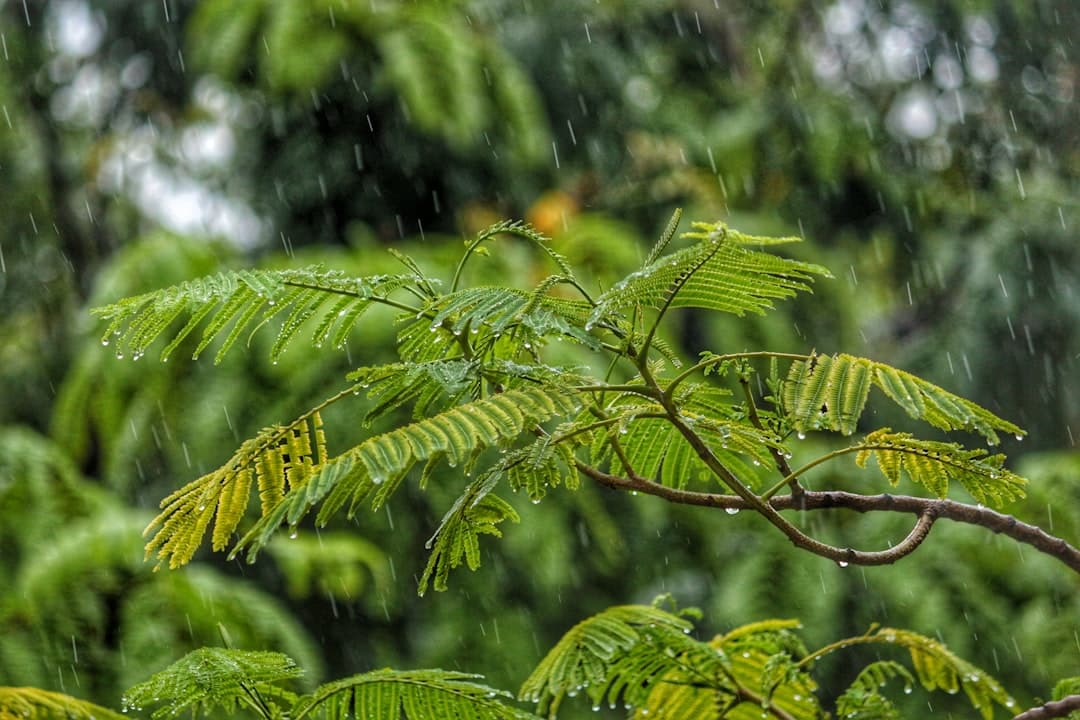
How monsoon humidity affects plants
High humidity during monsoon changes how plants regulate moisture. For Indian growers, this is when overwatering damage peaks — even with careful habits.
What's happening
Above 70–80% humidity, plants transpire much more slowly. Soil stays wet longer, roots sit in moisture, and risk of root rot climbs. Damp leaf surfaces invite fungal infections like leaf spot and powdery mildew.
Why this happens
During Indian monsoon (June–September), humidity stays 80–95% for weeks. Warm saturated air limits water movement from roots to leaves. Plastic pots with poor drainage barely dry between waterings. Balcony plants get extra moisture from rain splash.
What usually helps
Cut watering frequency by half during monsoon. Switch to chunkier soil with extra perlite or coarse sand. Move pots under covered balcony sections to control rain exposure. Clear blocked drainage holes. Spray neem oil every ten days to prevent fungal issues.
What to expect next
Expect slower growth and occasional leaf drop during monsoon — that's normal. Focus on preventing rot and fungus, and plants bounce back once drier weather returns.