
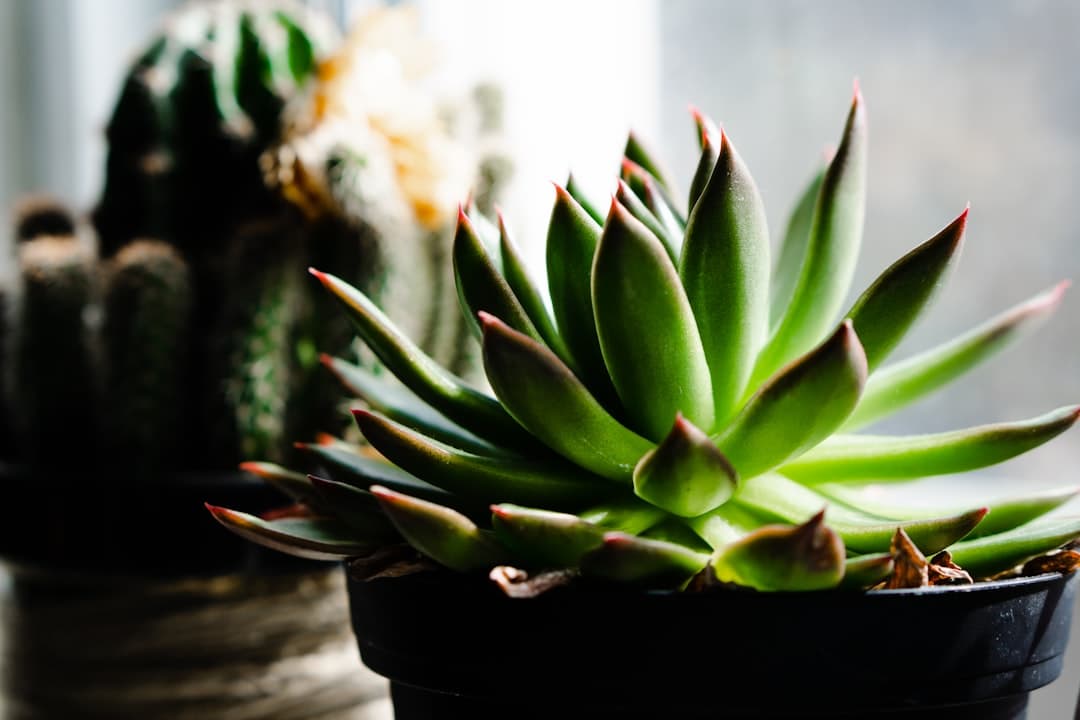
Succulent rot often progresses without early warning signs.
What's happening
Roots decay well before leaves show symptoms. By the time you spot soft or blackened leaves, rot has spread through much of the root system. The stem base may feel mushy even while upper leaves look fine.
Why this happens
Excess moisture stays trapped in heavy soil. Many Indian nurseries sell succulents in regular garden soil that holds water too long. Terracotta pots without drainage holes or saucers collecting monsoon rain worsen things. High humidity in July–September means soil looks dry on top while staying damp inside.
What usually helps
Let soil dry fully between waterings — push a skewer to the bottom to check. Repot into cocopeat, perlite, and coarse sand in equal parts. Terracotta pots wick moisture naturally. If rot has started, trim mushy roots with a clean blade, air-dry the cut for a day, and repot into fresh dry mix.
What to expect next
A rescued succulent may not show new growth for two to three weeks. Keep it in bright indirect light and hold off watering until fresh growth appears at the centre.