
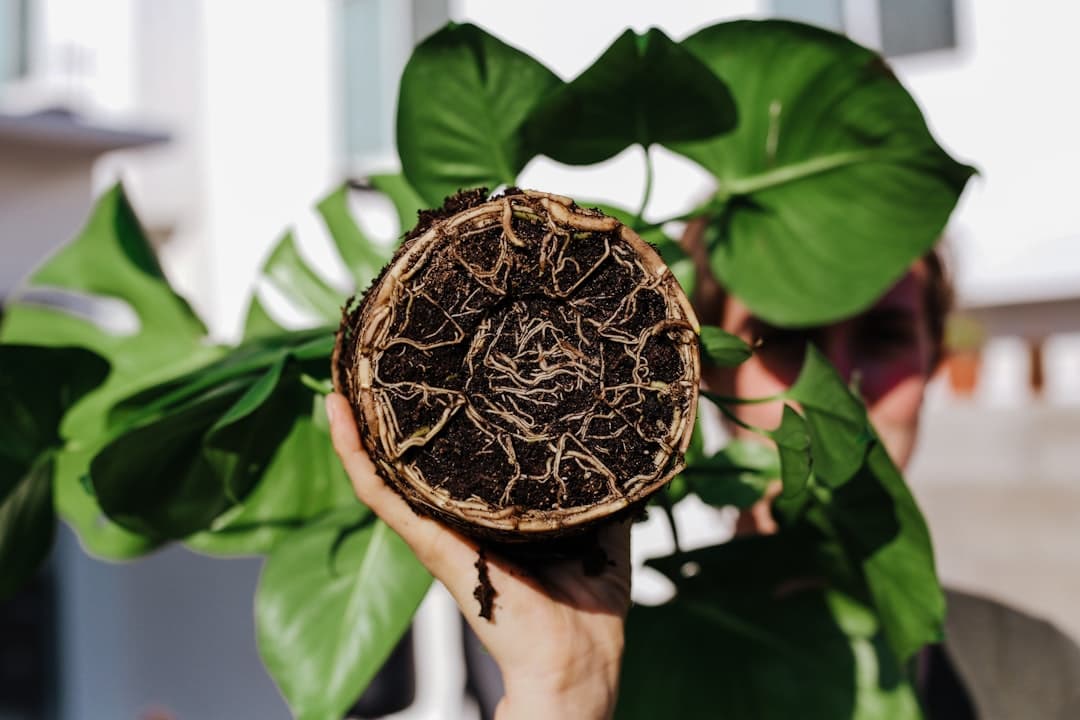
What root rot actually means
Root rot is often misunderstood and usually begins silently, before visible symptoms appear on leaves. It is one of the most common causes of plant death in Indian container gardens.
What's happening
Roots decay from prolonged lack of oxygen in waterlogged soil. Healthy roots are firm, white or tan. Rotting roots turn dark brown or black, feel mushy, and smell like stagnant water. The plant starves even while sitting in wet soil.
Why this happens
Excess moisture creates ideal conditions for harmful fungi. This peaks during monsoon when rain, humidity, and low sunlight slow soil drying. Pots without drainage, cachepots trapping water, and heavy soil mixes are the usual culprits.
What usually helps
Unpot any plant with unexplained wilting or a mushy stem base. Trim dark mushy roots with clean scissors, air-dry the root ball in shade, then repot in fresh well-draining mix. A pinch of cinnamon on cuts acts as a mild antifungal. Never reuse soil from a rotted plant.
What to expect next
With healthy roots remaining, recovery takes three to four weeks. Severe cases are harder, but stem cuttings can sometimes rescue the plant.