
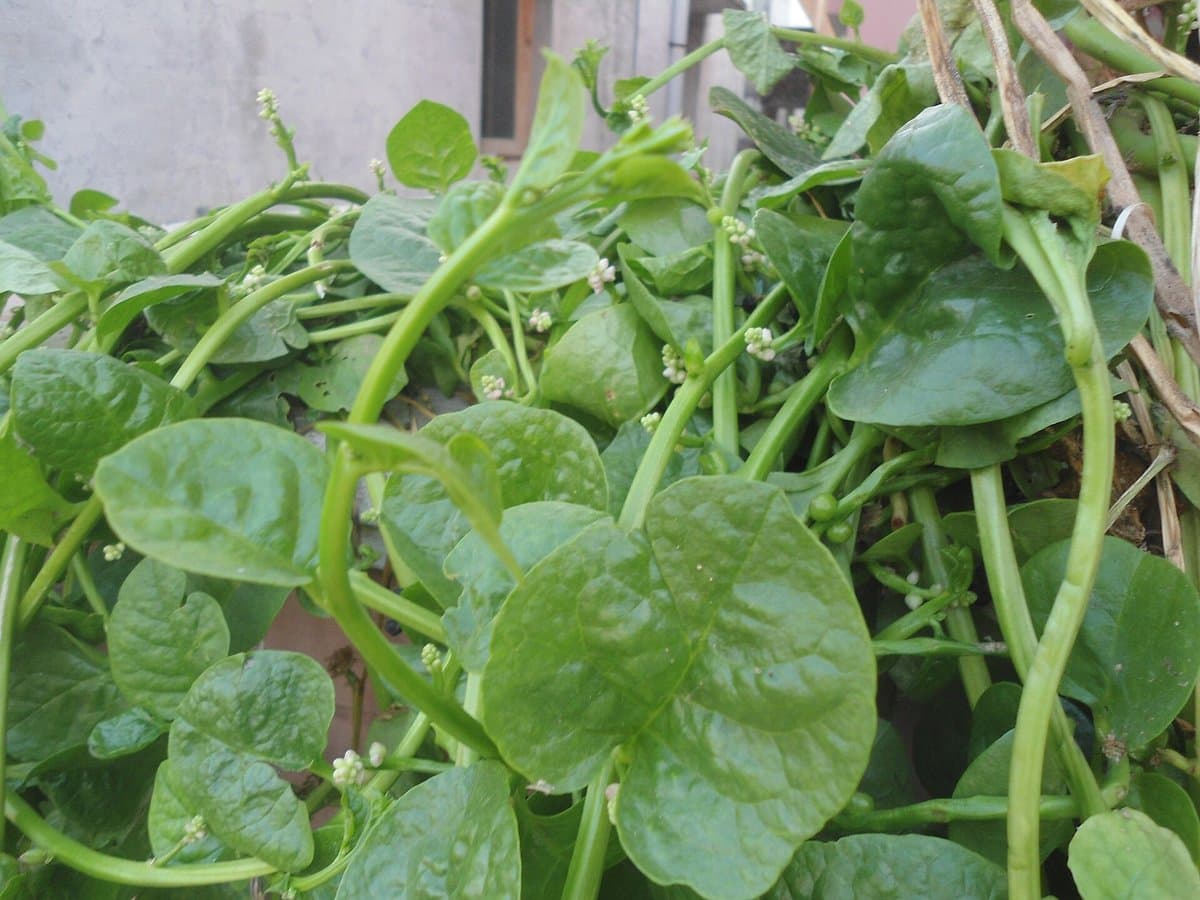
Malabar spinach, Basella alba, is a tropical edible vine grown under regional names including vine spinach, Indian spinach, poi and basale. It is not the cool-season spinach Spinacia oleracea. That difference is its advantage: Malabar spinach grows strongly in warm, humid weather when ordinary spinach often struggles or bolts.
For a balcony crop, give one plant a roomy draining pot, a sturdy vertical support, several hours of sun and consistently moist soil. Harvest the young tips often so the vine branches instead of becoming one long stem.
Malabar spinach at a glance
- Season: warm weather; growth is poor in persistent cool conditions and frost damages it.
- Light: full sun for strong growth, with some afternoon protection on exceptionally hot reflective balconies.
- Pot: one vigorous plant in a stable container with good depth and drainage.
- Support: a trellis, railing net or strong strings installed before the vine gets heavy.
- Water: steady moisture without stagnant soil.
- Harvest: tender leaves and young stems, picked repeatedly.
The Vatisha Malabar spinach profile gives the quick plant summary.
When to start in different parts of India
Start when days and nights are reliably warm. In much of peninsular and coastal India, the growing window can be long. In northern and elevated cities, wait until cold nights have passed; growth accelerates with summer warmth and can continue through monsoon if drainage is good.
This is more useful than one national sowing month. A February start may work in a warm coast while the same seed sits inactive in a cold northern balcony. If local nights are still cool, begin in a warm bright protected spot or wait.
Malabar spinach is frost tender. In cold-winter regions, treat it as a warm-season crop and save seed or take cuttings before temperatures fall.
Seed or cutting: both work
The dark seed coat can germinate slowly. Lightly scarify the surface with fine sandpaper or soak seed in clean water before sowing, then place it in warm, evenly moist mix. Do not bury it deeply or keep the pot waterlogged. Germination and early growth are much faster in real warmth than in a cool room.
Stem cuttings are often simpler. Take a healthy non-flowering tip, remove the lowest leaves and root the nodes in moist potting mix. A cutting can also root where a vine touches damp soil. Start more than one, then keep the strongest plant for the final container.
The right pot and trellis
Use a container roughly 30 cm or more across and deep for one productive vine, with several open drainage holes. Bigger is helpful only if the mix remains airy and the balcony can safely carry the wet weight. Avoid shallow decorative bowls: the vine needs steady root moisture and enough anchorage for a tall support.
Install the trellis at planting time. A 1.5–2 m support is practical for harvesting; beyond that, redirect the tips sideways or pinch them. Tie young stems loosely until they begin twining. Keep the support inside the balcony line and secure it against monsoon wind rather than letting vines trail over a public edge.
Soil and feeding for edible leaves
Malabar spinach prefers rich, moisture-retentive but well-drained soil. Use an edible-container mix built from good potting base, mature compost and a coarse component that keeps pore spaces open. Do not use raw manure or unknown roadside soil in a food crop.
Mix compost into the pot before planting, then top-dress lightly as repeated harvests remove nutrients. If growth becomes pale despite good light and roots, use a fertiliser labelled for edible leafy vegetables at the package rate. More nitrogen is not a substitute for sun or root space.
A thin organic mulch can slow summer drying, but keep it away from the stem and check beneath it before watering during monsoon.
Watering through heat and rain
The fleshy leaves look succulent, but a productive vine prefers consistent root moisture. Water deeply when the upper mix begins to dry. On a hot windy balcony this may require frequent checks; in cloudy humid weather the interval lengthens.
Do not leave the pot in a full saucer. High rainfall is tolerated better when water can leave quickly. If lower leaves yellow and the mix smells sour, improve drainage and reduce watering. If leaves are thin and the vine wilts in dry soil, rehydrate fully and make the next check earlier.
Water the soil rather than repeatedly wetting edible foliage late in the day. Good spacing and morning watering help leaves dry before night.
Train and harvest for a bushier vine
Once the vine is established, pinch the top just above a leaf pair. Side shoots will form from lower nodes. Harvest young leaves and the tender 10–15 cm tips with clean scissors, leaving enough foliage for regrowth. Frequent small harvests are better than stripping the plant bare.
Under good warm conditions, the first meaningful harvest can arrive around two months after sowing; the University of Florida guide reports maturity near 70 days in optimal conditions. A cutting may be quicker. The exact timing depends on temperature, light and pot volume.
The leaves and tender stems can be eaten raw or cooked, but their naturally mucilaginous texture becomes more noticeable in soups and stews. Wash harvested produce under clean running water and follow normal food-safety practices.
When flowering starts
Small pale flower spikes are normal. Dry soil, extreme heat or an older unharvested vine can push the plant toward flowering, after which leaves may become less tender or more bitter. Keep moisture steady and keep harvesting tips if leaves are your priority.
To save seed, allow a few flower spikes to mature into dark berries. The juice stains strongly, so handle it away from pale balcony surfaces. Let seed fully mature and dry before storage. Remove unwanted berries if you do not want volunteer vines.
Common problems
Slow growth: usually cool weather, low light, a cramped root zone or poor nutrition. Check those before adding repeated feeds.
Long vine with few leaves: increase useful light and pinch the growing tips to stimulate branches.
Yellow lower leaves: inspect both drainage and feeding. Wet sour soil points to roots; an old crowded pot with healthy drainage may need compost or a labelled feed.
Chewed leaves: inspect at dusk and under leaves for caterpillars or snails. Hand removal and physical barriers are preferable first steps on a small edible plant.
Leaf spots in monsoon: remove badly affected leaves, improve spacing, avoid late overhead watering and do not compost obviously diseased material beside the pot. Use only treatments explicitly labelled for edible crops, following harvest intervals.
A simple balcony setup
- Place a draining pot where it receives morning to midday sun.
- Fix a trellis before planting.
- Sow warm or plant a rooted cutting.
- Keep the mix evenly moist through establishment.
- Pinch the lead shoot and begin light harvests once growth is strong.
- Check support, drainage and leaf undersides after heavy rain.
One healthy vine can provide repeated small harvests without filling the whole balcony.