
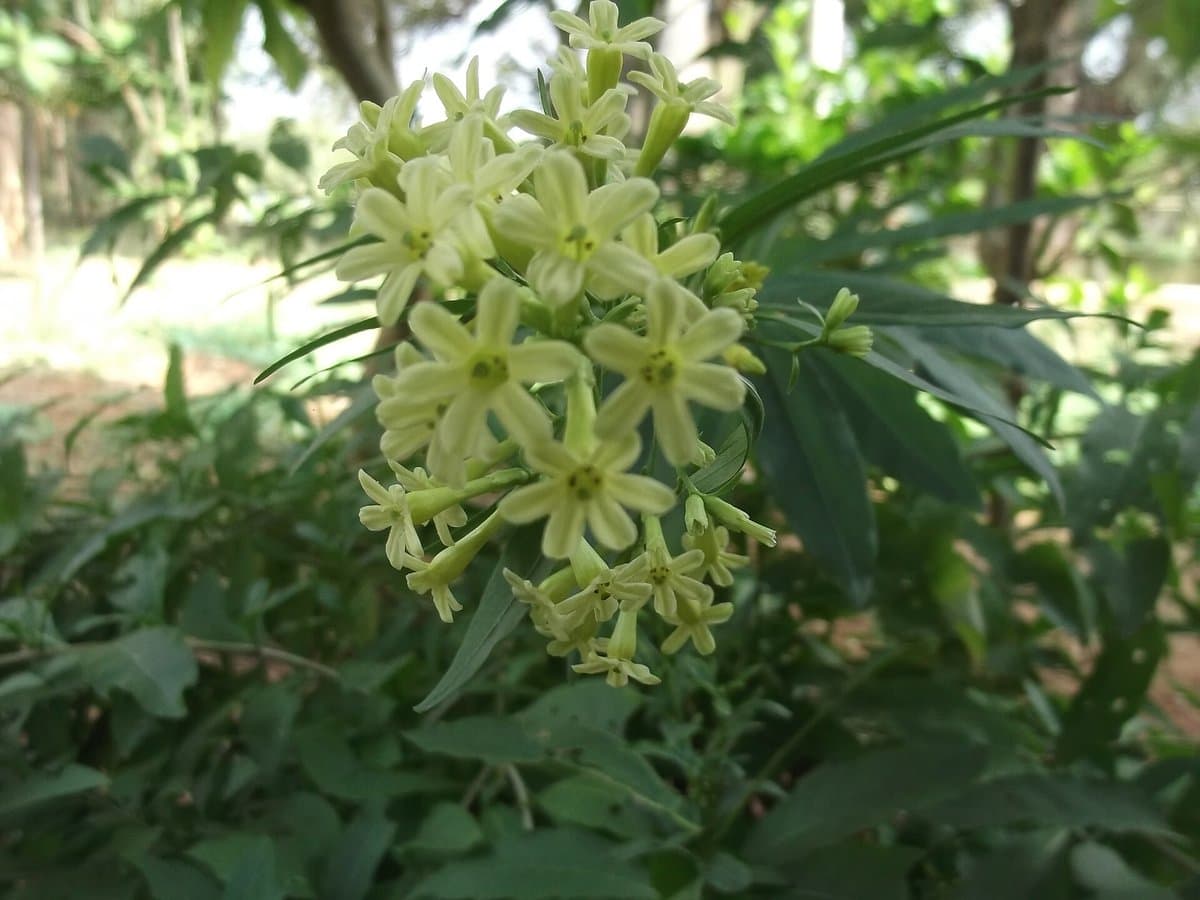
Night-blooming jasmine, Cestrum nocturnum, is the fragrant shrub commonly called raat ki rani, queen of the night or night-blooming jessamine. It is not a true jasmine: it belongs to the nightshade family, Solanaceae, rather than the genus Jasminum. Its narrow greenish-white flowers release a powerful scent after dusk.
On a balcony it needs a bright position, an adequately large draining container and regular pruning after flowering to control its fast woody growth. Placement matters as much as care: the fragrance can overwhelm a small bedroom window or a neighbour’s sitting area, and all parts are toxic if ingested.
Care at a glance
- Light: full sun to partial shade; strong light supports flowering, with afternoon protection in severe reflected heat.
- Water: moderate, thorough watering followed by free drainage.
- Soil: fertile, loamy and well drained.
- Growth: a fast shrub that can reach several metres if not pruned.
- Flowers: open and become fragrant from dusk into night.
- Safety: keep leaves, flowers, stems and berries away from children and animals; do not use any part as food or medicine.
See the night-blooming jasmine plant profile for its compact catalog details.
Choose the balcony position before the pot
Give the plant several hours of useful sun. Gentle morning sun with bright light through the day works well on many balconies. In very hot inland cities, a west-facing wall and tiled floor can overheat the pot; use afternoon shade or move it back from the parapet. Too much shade often produces long stems and fewer flowers.
Then consider people. The scent is strongest at night and can travel into nearby rooms. Do not place the pot directly beside a bedroom window if anyone is sensitive to strong fragrance, headaches or respiratory irritation. Keep it inside the railing line and away from shared corridors where fallen berries could be reached by children or pets.
The shrub also catches wind. Use a heavy stable pot and secure young stems to a support without tying them tightly. Never balance a large woody plant on an outer ledge.
Pot size, soil and drainage
A young nursery plant can begin in a moderate pot, but it will not remain a small tabletop shrub. Move it up one size when roots circle densely or the pot dries extremely quickly. A wide, stable base helps as the canopy expands. Every container needs several unobstructed drainage holes.
Use a fertile potting mix with a loam or coco-based foundation, mature compost and coarse aeration material. The goal is steady moisture plus air around the roots. Dense clay dug from the ground can become a heavy, airless block in a pot.
Keep the plant at the same depth during repotting. Do not bury the woody stem. Repot during active warm growth, not while it is waterlogged, severely wilted or carrying a full flush of buds.
Watering across Indian seasons
Water slowly until the full root ball is moist and excess drains. Check below the top layer before repeating. A small splash wets only part of a large woody root system; leaving the pot in a saucer keeps the lower roots saturated.
In summer heat and balcony wind, check more often. During monsoon, shelter the pot from continuous rain and clear fallen leaves from the surface. In a cool northern winter, growth can slow and the mix may take much longer to dry. Follow the soil and plant rather than preserving a fixed interval.
Yellow leaves in wet soil point first to drainage and root stress. Limp leaves in a dry, light pot need a thorough drink. Similar symptoms can have opposite causes, so always touch the mix.
How to encourage flowers
Night-blooming jasmine is listed by NParks as free-flowering in suitable warm conditions, but a container plant still needs enough light and mature new growth. If yours is healthy but not blooming:
- Increase useful daylight gradually.
- Stop repeatedly trimming every new shoot.
- Feed modestly during active growth with a balanced flowering-shrub fertiliser at the label rate.
- Keep moisture steady while buds form.
- Check whether a recent hard prune or repot reset the flowering cycle.
The individual flowers are not showy during the day; look for clusters of slender pale tubes. Fragrance after dusk is the clearest sign they have opened. Flowering timing varies by local warmth, light and pruning, so do not force it with excess fertiliser.
Pruning without losing the next flush
Prune after a main flowering flush. Remove dead and crossing stems first, then shorten long flexible branches above an outward-facing node. A light prune encourages branching and keeps flowers within view. If the plant is badly overgrown, reduce it in stages instead of removing most foliage at once.
Wear gloves and keep all cut material contained because every plant part is toxic if eaten. Do not leave prunings where pets, livestock or children can reach them, and do not compost fruit where curious animals forage. Clean tools after use.
Frequent shearing keeps a formal shape but can remove developing flower clusters. For a balcony, a loose rounded shrub is usually easier to manage and better for flowering.
Common problems
Lots of leaves, few flowers: review light, repeated pruning and excess nitrogen.
Long weak stems: the plant may be reaching for light or receiving too much nitrogen. Increase light gradually and prune after the next flowering opportunity.
Yellowing with wet soil: clear drainage and reduce the watering frequency. If the base is soft or roots smell sour, inspect for rot.
Crisp leaves and rapid droop: check heat reflected from walls, dry wind and a root-bound pot.
White insects under leaves or a sticky surface: NParks and extension references note that Cestrum can attract pollinators, while NC State advises monitoring whiteflies. Isolate the pot, wash manageable pests away and identify them before using a labelled treatment.
No growth after a cold spell: scrape only a tiny section of outer bark on one stem; green tissue suggests it is alive. Protect it, reduce watering while inactive and wait for sustained warmth before pruning further.
The toxicity warning is part of good placement
NC State Extension classifies the genus Cestrum as having high-severity poison characteristics and states that all parts are toxic if ingested. Kew also records Cestrum nocturnum as a poisonous plant and notes livestock poisoning. The white berries can look attractive, so remove them promptly in a home with children or animals.
Do not brew the flowers, burn leaves, use homemade medicinal preparations or assume the common name “jasmine” makes it equivalent to edible or tea jasmines. If ingestion is suspected, contact a medical professional, veterinarian or poison service promptly; do not wait for symptoms or induce vomiting without professional advice.
Monsoon and winter checklist
Before prolonged rain: move under partial cover, empty the saucer, check ties and clear drainage holes.
After a storm: inspect for broken stems and standing water; make clean cuts rather than leaving torn wood.
Before a cold northern winter: move the pot to a bright sheltered position away from frost and reduce watering as growth slows.
In warm coastal winter: continue normal observation; the shrub may stay evergreen and active.
With enough room and thoughtful placement, night-blooming jasmine can be a memorable balcony plant without becoming a neighbour, safety or maintenance problem.