
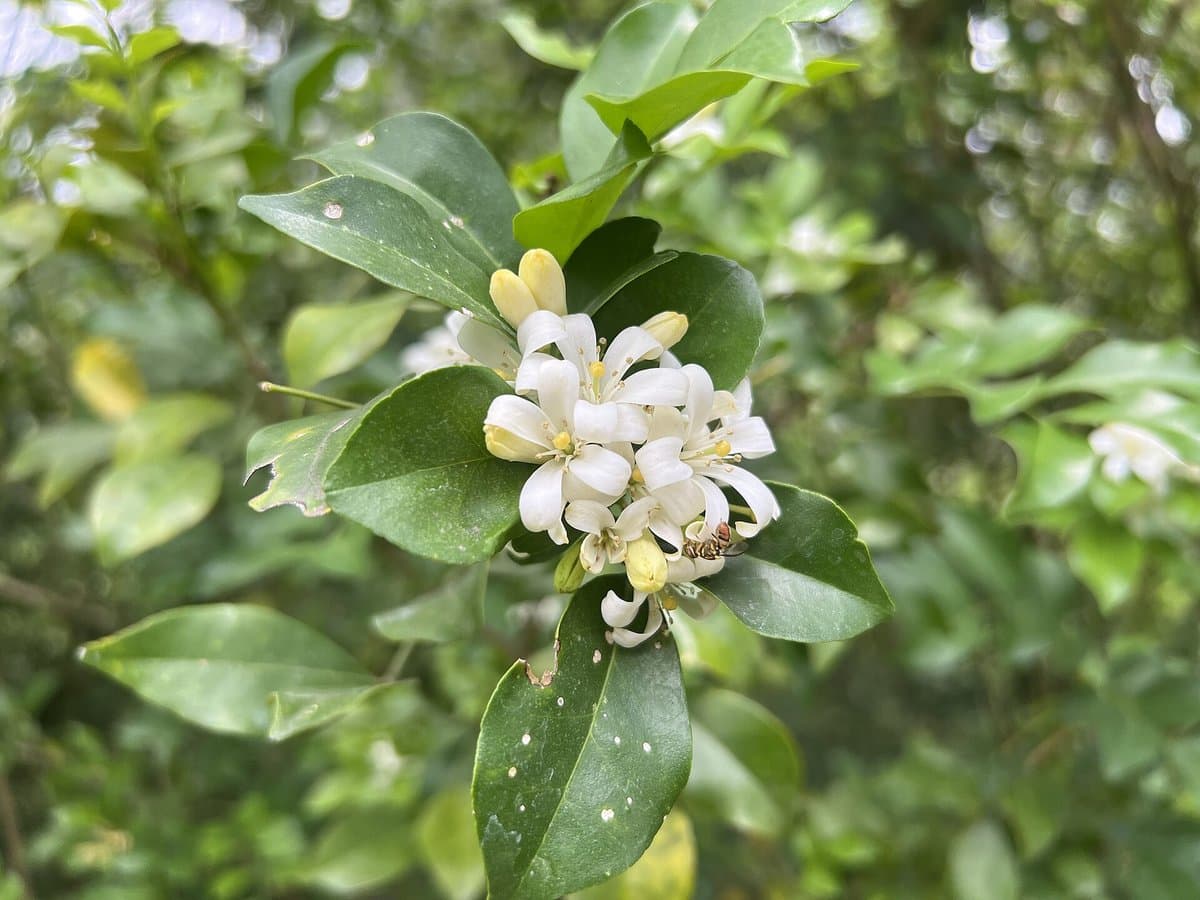
Kamini, Murraya paniculata, is a fragrant evergreen shrub in the citrus family. It is also called orange jasmine or orange jessamine, but it is not a true jasmine and it is not the curry leaf plant, Murraya koenigii. At home it can be kept as a rounded balcony shrub, a loose screen or a carefully clipped topiary.
The simplest route to flowers is several hours of useful sun, evenly moist but freely draining soil, and light pruning after a flowering flush. A Kamini kept in deep shade may stay green but flower poorly; one clipped every few days may lose the shoot tips that carry buds.
Kamini care at a glance
- Light: full sun gives the strongest flowering; slight shade is tolerated.
- Water: moderate and thorough, followed by drainage; do not keep the root ball permanently wet.
- Soil: fertile loam or an airy container mix that holds some moisture without becoming compacted.
- Pruning: shape after flowering or when a growth flush matures; avoid constant shearing.
- Growth: a naturally woody shrub, not a tabletop plant forever.
- Pest watch: inspect tender new flushes for sap-sucking insects, especially if citrus grows nearby.
See the matching Kamini plant profile for a compact overview.
Give it enough sun to make buds
NParks lists full sun as Kamini’s preferred light and notes that slight shade is tolerated but flowering is best in sun. On an Indian balcony, aim for a place with direct morning sun or a substantial block of bright light. In a very hot west-facing space, acclimatise a nursery plant gradually and protect the pot from reflected heat while it establishes.
A plant that makes long soft shoots and sparse leaves is asking for more light. Move it brighter in stages rather than pruning those shoots repeatedly in the same dim position. If the leaves bleach or develop crisp tan patches immediately after a move, reduce peak-afternoon exposure and slow the transition.
Kamini can grow indoors only where the window is genuinely bright. A decorative corner several metres from glass is unlikely to support regular flowering.
Choose a stable pot and airy soil
Kamini becomes a branching shrub with a woody crown, so use a stable container with clear drainage holes. Increase pot size gradually. An oversized pot can hold a large wet zone beyond the current roots, while a very small pot dries rapidly and tips over as the canopy grows.
Use a fertile but open mix: a quality loam or coco-based potting mix with mature compost and a coarse drainage component. Dense garden soil alone tends to compact in a container. Keep the root flare at the same depth when repotting and leave a watering gap below the rim.
Repot when roots are densely circling, drainage has slowed despite clear holes, or the plant dries unreasonably fast. Early warm-season growth is usually easier than repotting during a cold spell or after weeks of monsoon saturation.
Water the root ball, then let it breathe
Water slowly until the entire root ball is wet and excess drains. Check the mix before watering again instead of adding a small daily splash. The upper layer can begin to dry, but a flowering shrub should not repeatedly swing from bone-dry to flooded. Severe drying may abort buds; constant saturation weakens roots.
During hot, windy weather, check earlier. During humid monsoon weeks, shelter the pot from repeated rain and make sure its saucer is empty. If leaves yellow while the soil remains wet, pause watering and inspect drainage before adding fertiliser.
A newly purchased plant may lose a few leaves while adjusting to a different light and watering pattern. Keep the conditions stable and judge it by the next flush.
How to get more Kamini flowers
Kamini flowers in clusters at shoot ends and leaf axils. The timing varies with climate, plant maturity and growth flushes, so a promise such as “flowers every month” is not useful for every Indian home. Focus on the conditions that allow buds to form.
- Give the plant stronger light if it is healthy but producing only foliage.
- Stop frequent clipping and allow some shoots to mature.
- Feed modestly during active growth with a balanced or flowering-plant fertiliser at the label rate. Excess nitrogen can favour soft foliage over a balanced flowering cycle.
- Keep moisture steady while buds develop, without leaving the pot waterlogged.
- After a flowering flush finishes, remove spent clusters and make any needed shaping cuts.
Do not repot, hard-prune and heavily feed at the same time. One measured change makes the plant’s response easier to read.
Pruning a Kamini without losing its character
For a natural balcony shrub, remove dead, crossing and inward-growing twigs first. Shorten the longest shoots just above an outward-facing leaf or branch. Light tip pruning after a bloom encourages a denser shape.
Formal topiary needs frequent maintenance, but there is a trade-off: repeated shearing creates a neat outline while removing some flower-bearing growth. Decide whether your priority is a strict shape or fragrant blooms. Use clean sharp secateurs rather than tearing woody stems.
If the shrub has become very large, reduce it in stages so enough healthy foliage remains to support recovery. Avoid a severe cut immediately before peak heat or prolonged rain.
Common Kamini problems
Healthy leaves but no flowers: usually review light, repeated clipping and high-nitrogen feeding first. A young or recently repotted plant may simply need time.
Yellow leaves and wet mix: improve drainage and lengthen the interval between waterings. Do not assume yellow automatically means nutrient deficiency.
Crisp edges and rapid wilt: check a root-bound pot, hot wind and reflected balcony heat. Water deeply if the inner root ball is dry.
Sticky leaves, black coating or fixed bumps: look for scale or other sap-sucking insects. Honeydew can support sooty mould. Wash manageable infestations, protect beneficial insects and use only a product labelled for the identified pest and ornamental plant.
Twisted young shoots with tiny jumping or waxy insects: Kamini is a host of Asian citrus psyllid. If you also grow citrus, isolate the affected pot and seek local horticultural or plant-health guidance rather than moving cuttings or spraying blindly.
Monsoon and winter adjustments
In monsoon, the priority is an oxygenated root zone: clear drainage, no standing saucer water, enough spacing between plants and shelter during relentless rain. Prune only when the plant can dry promptly after cutting.
In cool northern winters, growth may slow. Reduce feeding and water only as the mix dries, while protecting the plant from frost and cold wind. In warm coastal climates it may continue growing, so follow the plant rather than the month.
A note on names and household use
Nurseries may use “Kamini,” “orange jasmine,” “Chinese box” or “mock orange.” Confirm the botanical name Murraya paniculata so you do not confuse its care with curry leaf or true jasmine. Its ornamental flowers and berries should not be treated as food or home medicine based on an unverified social-media claim.