
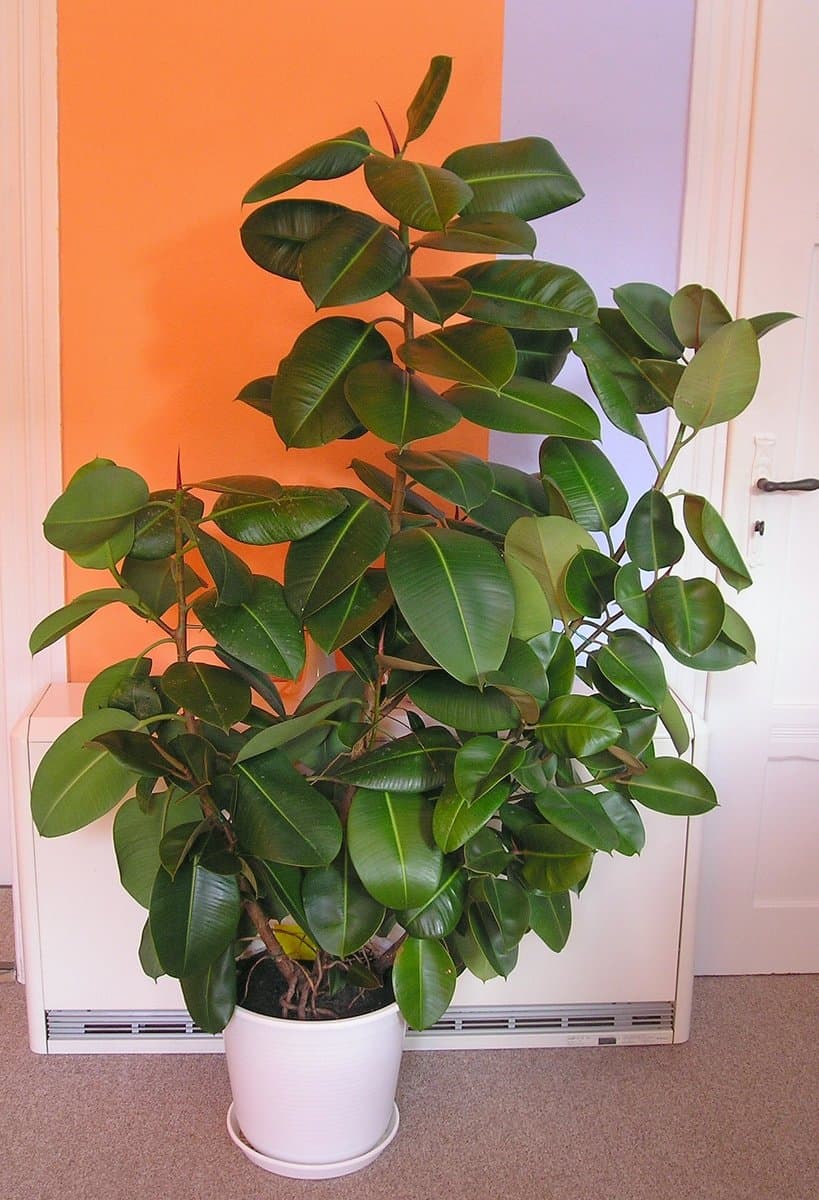
The rubber plant, Ficus elastica, grows best in a bright, stable position with an airy potting mix and a wet-dry watering cycle. In Indian homes, the main challenge is rarely a missing weekly schedule. It is the sharp change between hot summer windows, humid monsoon weeks, cool winter nights and dry AC air.
Give it bright filtered light, water only after the upper potting mix has partly dried, and let excess water leave the pot completely. Then keep the plant in one place long enough to respond.
Rubber plant care at a glance
- Light: bright indirect or filtered light; gentle morning sun is usually easier than harsh afternoon exposure.
- Water: water thoroughly after the upper few centimetres of mix dry; never leave the pot standing in runoff.
- Soil: moisture-retentive but well drained, with enough coarse material to keep air around the roots.
- Temperature: consistently warm; avoid cold draughts, abrupt moves and direct AC airflow.
- Feeding: light, label-directed feeding during active growth, not while roots are wet or the plant is stalled.
- Safety: the white latex sap can irritate skin and eyes, and the plant should not be chewed by pets or children.
You can also compare its size and home-fit traits on the Vatisha rubber plant profile.
The best light in an Indian home
A position close to a bright east-facing window is often straightforward: the plant gets useful morning light without hours of severe afternoon heat. Near south- or west-facing glass, use a sheer curtain or place the pot back from the pane. Glass and enclosed balconies can trap heat, and a leaf touching hot glass can scorch even when the room feels comfortable.
Dark-green rubber plants tolerate some shade, but growth becomes slower and stems may lean. Variegated cultivars such as ‘Tineke’ generally need brighter filtered light to hold their pattern. They are also more likely to scorch if moved straight into hard sun. Increase direct-light exposure gradually over a week or more.
Rotate the pot a quarter turn every week or two if growth leans strongly, but do not keep moving it between unrelated rooms. Ficus can respond to a sudden change in light or temperature by dropping leaves. Stability is part of the care plan.
How to water without guessing the weekday
Push a finger or wooden skewer into the upper few centimetres of mix. When that zone is dry but the root ball is not pulling away from the pot, water slowly across the surface until excess drains. Empty the saucer or decorative cover pot. If water races down one channel and leaves most of the root ball dry, pause and water again gently.
In summer, a plant beside a bright warm window may reach that point sooner. During monsoon, humid air and cloudy days can keep the same pot wet much longer. In winter or a cool AC room, growth may slow and the interval can lengthen again. The test stays the same even when the calendar changes.
Do not interpret every drooping leaf as thirst. A rubber plant can droop or shed leaves when roots remain wet and short of oxygen. Check the mix first. If it is damp deep in the pot, improve light and airflow, clear blocked drainage and wait rather than watering again.
Pot and soil that work through monsoon
Use a container with open drainage holes. A heavy outer cachepot is fine for stability, but the inner nursery pot must be lifted out for watering and allowed to drain before it goes back. Choose the next pot only slightly wider than the root ball; a large volume of unused wet mix dries slowly.
A practical mix can combine two parts good-quality indoor potting base or buffered cocopeat, one part mature compost, and one part coarse aeration material such as perlite, pumice or fine orchid bark. Adjust the recipe to your home: add more coarse material in very humid rooms, and avoid dense garden clay in a container. The DIY potting mix guide explains the components in more detail.
Repot when roots circle densely, water can no longer enter evenly, or the plant becomes unstable—not simply because a year has passed. The RHS suggests repotting ornamental figs roughly every two to three years. For a large specimen that is hard to move, replacing the top layer with fresh mix may be enough between repots.
Read the leaves before treating the plant
One old lower leaf turns yellow: this can be normal ageing, especially if the rest of the plant is firm and growing.
Several leaves yellow while the mix stays wet: reduce watering frequency and check drainage. Soft dark roots or a sour smell need a more careful root inspection.
Sudden leaf drop: review recent moves, cold draughts, AC exposure, low light and overwatering. Correct the environmental change, then give the plant time instead of stacking treatments.
Dry brown edges or curled leaves: check whether the root ball became very dry, whether warm wind hits the plant, or whether an AC vent is drying one side.
Pale scorched patches: move it out of harsh direct sun and acclimatise more slowly. Damaged tissue will not turn green again; judge recovery by new leaves.
Sticky leaves, fine webbing or small fixed bumps: inspect for scale, mealybugs or spider mites. Isolate the plant, wipe leaves, and identify the pest before choosing a labelled treatment.
Dust also hides pests and reduces the plant’s glossy appearance. Support each leaf with one hand and wipe it gently with a damp soft cloth. Leaf-shine products are unnecessary.
Feeding, pruning and branching
Feed only while the plant is producing healthy new growth. Use a balanced houseplant fertiliser at the label rate; more is not faster, especially in a small pot. Pause when the plant is stressed, freshly repotted, waterlogged or barely growing in winter.
A single unpruned stem tends to grow tall. To encourage branching, prune above a node during a warm active-growth period. Wear gloves, protect the floor and keep the milky latex away from skin and eyes. Clean the tool before and after the cut. A very tall bare plant can also be propagated by air layering, but that is a slower project than a routine tip prune.
New leaves emerge wrapped in a coloured sheath and harden over time. Resist touching or forcing a leaf open.
Summer, monsoon and winter adjustments
Peak summer: filter harsh west sun, keep the pot off hot stone, and check moisture earlier. Do not compensate for heat by leaving water in the saucer.
Monsoon: prioritise light and drainage. Open windows when safe, space plants so leaves can dry, and lengthen the watering interval.
Winter in northern or elevated cities: protect the plant from cold glass and night draughts. Water less often if growth slows, but do not let the entire root ball remain dry for long periods.
AC rooms: place the pot outside the direct air stream. A stable room can suit a rubber plant; repeated hot-cold shifts and dry airflow are harder on it.
A calm recovery rule
Change the clearest cause first, then watch the newest growth for two to four weeks. Old damaged leaves may remain marked. New leaves that open firm and hold their colour are stronger evidence of recovery than a perfect-looking old leaf.